Beyond the meme: Why everyone’s posting about … piezoelectric tiles?

June 24, 2026
by
Yusuke Saito
If your Reels, TikToks, or YouTube Shorts feeds have recently tried to “educate” you on the Mercedes CLR GTR or the physics of Japan's piezoelectric tiles underneath a video of someone making a sandwich, you’re not witnessing a glitch. You’re witnessing the birth of a new digital vernacular.
The Algorithm Caption, a dense block of pseudo-informational, AI-generated copypasta, has evolved from a desperate SEO tactic into a high-irony social signal. It marks a pivot from the hashtag/keyword-stuffing of the 2010s toward a world where platform literacy is the primary language.
Algorithm caption examples
The Mercedes CLR GTR: "No problem! Here's the information about the Mercedes CLR GTR ...":
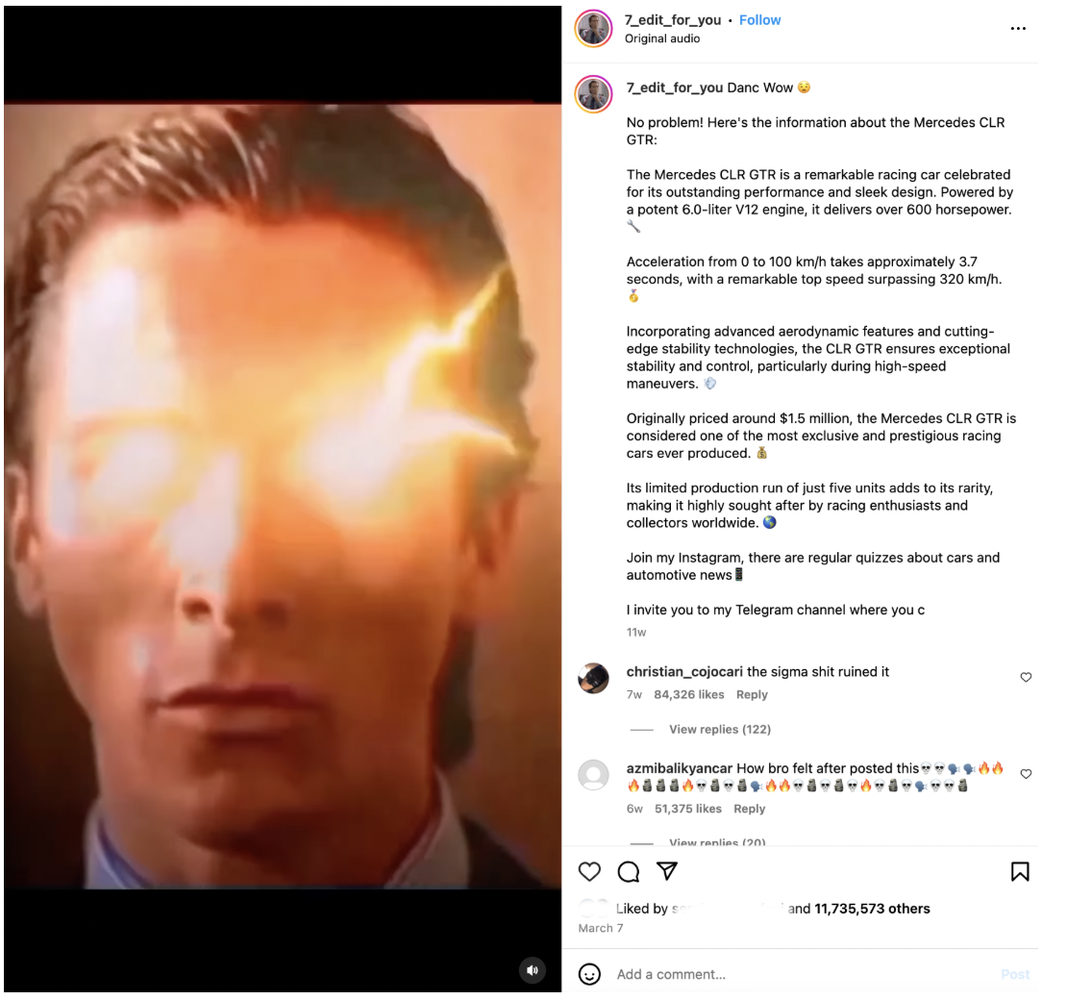
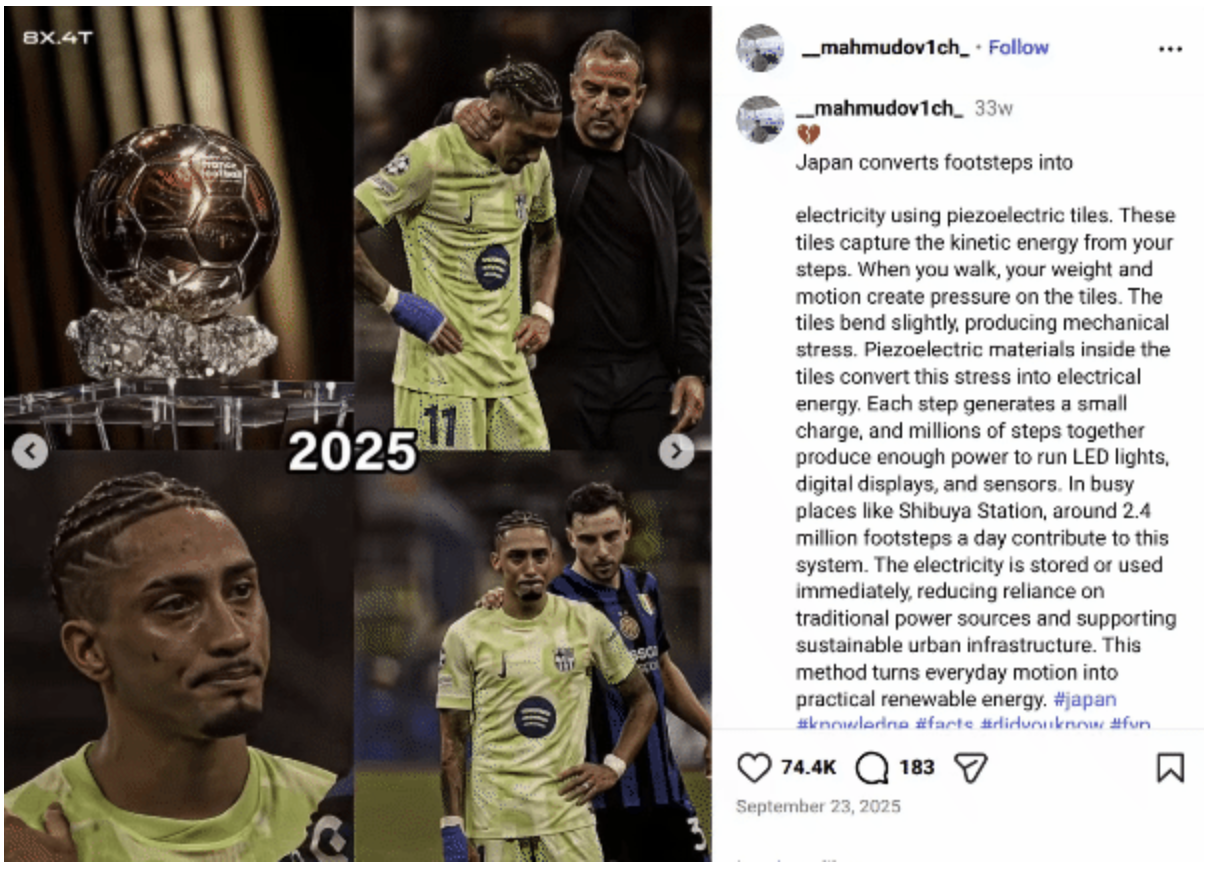
Japan Piezoelectric Tiles: "#Japan is turning footsteps into electricity! Using piezoelectric tiles, every step you take generates a small amount of energy. Millions of steps together can power LED lights and displays in busy places like Shibuya Station ...":
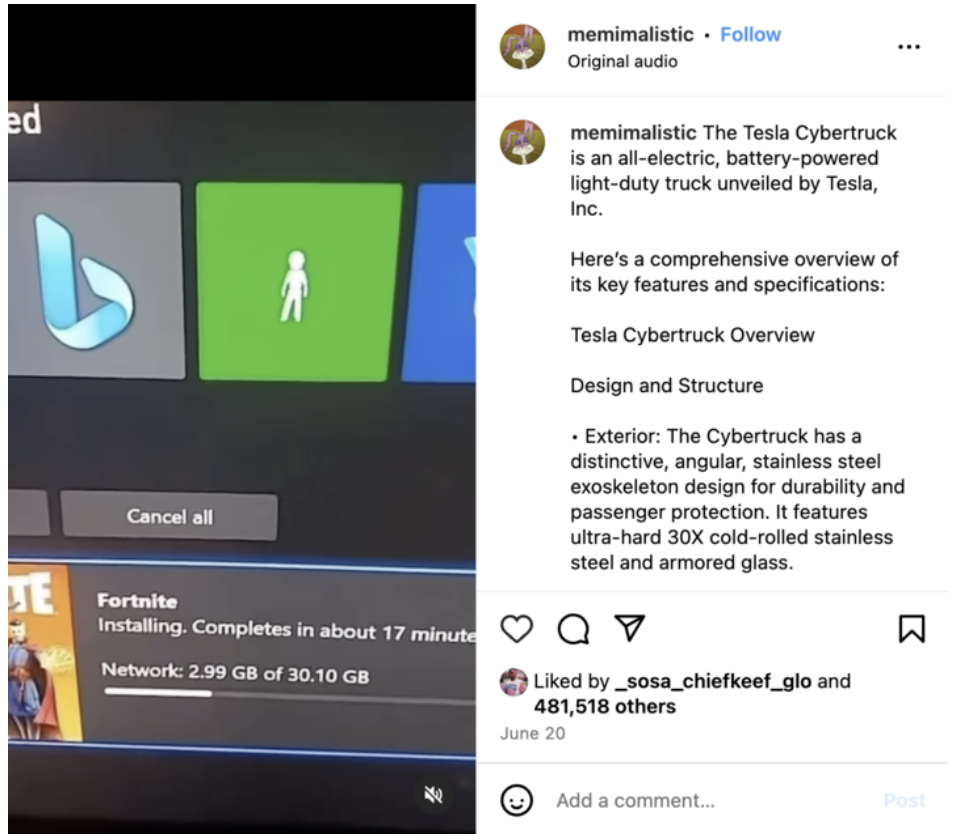
Tesla Cybertruck: "The Tesla Cybertruck is an all-electric, battery-powered light-duty truck unveiled by Tesla, Inc. Here's a comprehensive overview of its key features ...":
Ditching optimization for absurdity
Originally, these captions were born from convenient optimization. As recommendation engines remained opaque (black boxed), creators turned to AI tools like Jasper and Copy.ai to churn out valuable text.
The goal was simple: feed the beast. If the algorithm rewards technocratic educational content, creators reasoned, then every video should technically be a lesson, even if the text and video are completely divorced.
By early 2024, the trend morphed into a recognizable meme. Today, users paste these blocks of text not because they think it will trick a bot, but because it signals them as internet natives.
The caption is often subverted or referenced within the video itself.
The social signal of synthetic text
In the current ecosystem, the semantic value of the text has hit zero, while its social value has skyrocketed.
Posting a three-paragraph dissertation on the Tesla Cybertruck under a cat video is a wink to the audience. It says: “I know how this machine thinks it works, and I know that you know, too.”
As Scott Morris, CMO of Sprout Social, noted in an interview with Euronews:
“Success in this era of social is driven by balancing visibility with meaningful engagement and an understanding of exactly where and how people want to participate.”
Participation now looks like ritualized automation. By metabolizing AI-generated aesthetics into humor, users are stabilizing their AI anxiety. We aren’t being replaced by the bots; we’re wearing their clothes as a joke.
Why the ‘New Authenticity’ matters
This shift reflects a broader transformation in the creator economy. Authenticity is no longer measured by originality in the traditional sense, but by shared recognition. Users trust creators who speak the language of the platform, even if that language is a hallucinated AI paragraph about urban infrastructure.
In short:
- AI language is no longer just a tool; it’s its own aesthetic material.
- We recognize “our people” by the specific way they mock the algorithm.
- Audiences reward those who navigate the digital landscape with irony and ease.
The future of digital communication may depend less on authenticity and more on whether audiences recognize the language systems surrounding content.
So, in the spirit of visible platform fluency, it’s only fitting that this article concludes by practicing what it preaches. Below is the optimized, algorithmic copypasta of the final takeaways:
- Digital culture is a complex ecosystem🧠🌍. In modern social media landscapes, AI language is no longer utilized merely as an optimization tool; rather, it has transitioned into an aesthetic material.
- When creators implement high-irony algorithmic copypastas, they are not attempting to manipulate the recommendation engine. Instead, they are engaging in social indexing. Audiences routinely reward creators who navigate these digital frameworks with irony and ease. This shifts the central paradigm from "Does this trick the algorithm?" to "What does it mean when synthetic text becomes the primary medium for human recognition?"🧬
- The future of digital communication depends less on traditional authenticity and more on systemic legibility. At this moment, users are no longer feeding the algorithm — they are laughing at the menu.