When Victoria MacKenzie-Childs died, Gen Z turned a bankruptcy story into a reckoning — and reminded corporate America that provenance still matters

June 24, 2026
by
Chandler Le Francis
A viral TikTok tribute to the late Victoria MacKenzie-Childs was supposed to be a celebration of a whimsical legacy.
Instead, a single sentence in the video sparked a “Cultural Forensic” investigation, turning a moment of mourning into an organic, digital-led boycott.
It’s a vivid reminder that in 2026, the community doesn't just consume brand stories: they audit them.
How it began
On March 9, documentary filmmaker Joshua Charow posted a short video on TikTok featuring the artist Victoria MacKenzie-Childs and her husband Richard aboard their Ellis Island ferry home named Yankee.
Filmed in August 2025 and posted September 24, 2025, Charow reposted the video after MacKenzie-Childs’ death on March 4, 2026, meant to honor her legacy. Initially a human interest story, it turned into a larger narrative about the arts versus corporations.
In the video, MacKenzie-Childs shows her eccentric boat home and shares intimate details about her life, including her artistic practice, how she met her husband, and how she came to own one of the last ferry boat homes.
She also explains the story of how she started MacKenzie-Childs, a ceramics and home decor company known for its black-and-white checkerboard pattern named the “Courtly Check.”
Born from a need to pay for their daughter’s ballet lessons in 1983, the company revolutionized home decor with a whimsical approach to design. Starting with ceramics, the company expanded to textiles, furniture, and accessories, at one point employing over 400 artists.
Shattering the myth
A small utterance in the video from MacKenzie-Childs rallied audiences from sorrow to anger: “but we lost our company to an unfair, powerful situation.”
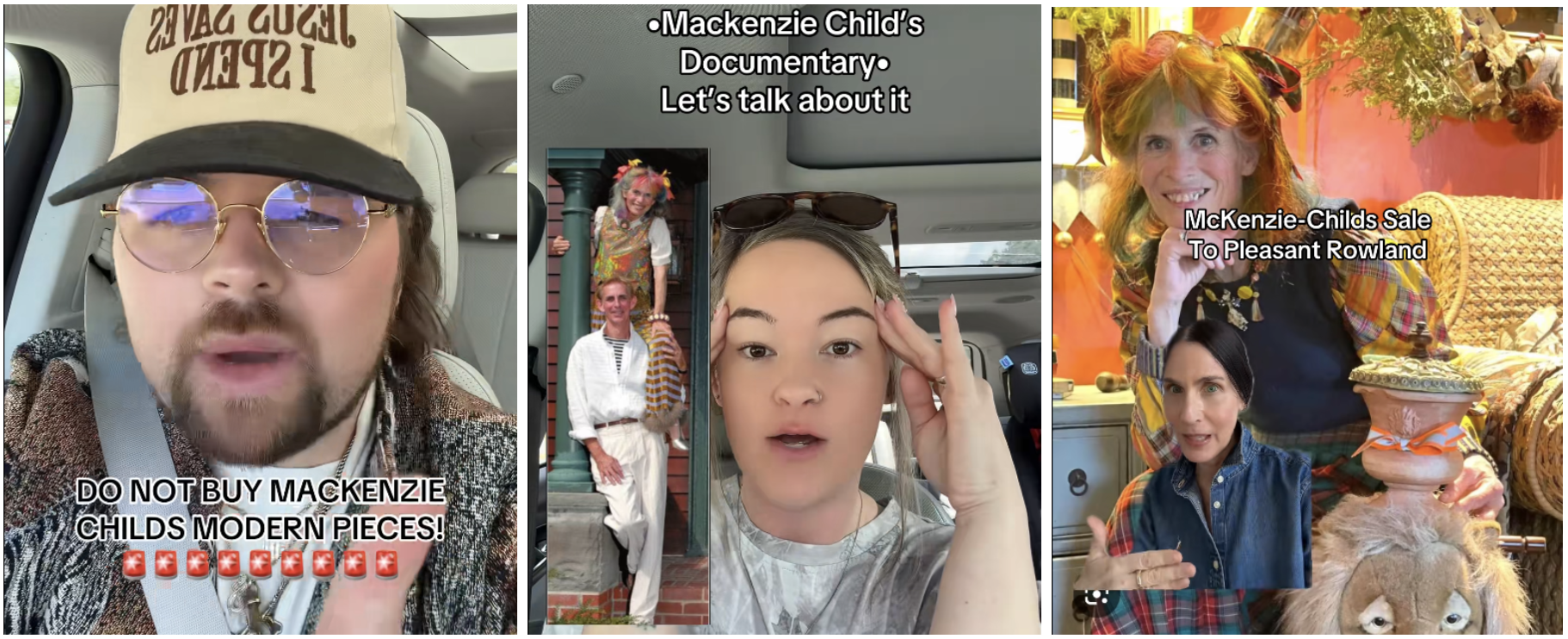
Since no names were mentioned, viewers went down the rabbit hole on TikTok, piecing together the story of how MacKenzie-Childs lost her company.
Videos posted by others (some of which generated millions of views) elaborated on this, pointing to how in the 2000s, MacKenzie-Childs went bankrupt and their debt was bought by Pleasant Rowland, the founder of American Girl. Rowland took control of the company, buying the assets, including the rights to the name.
It seems the elderly, soft-spoken artist with rainbow hair unintentionally sparked a wider conversation about the tension between corporate acquisition and the preservation of an artist's original legacy.
Since the video went viral, the MacKenzie-Childs TikTok page turned off comments, and on the American Girl TikTok page, commenters called for “Justice for Victoria” across multiple videos. Numerous videos on TikTok trashed the brand, and some lifelong American Girl fans started to question their loyalty to the brand.
What Victoria’s story means for culture
The story brings up many interesting points, particularly in the conversation of how brands can tap into the zeitgeist and artistic movements without inadvertently pushing boundaries and causing controversy:
- Creators as Documentarians: It wasn't a news outlet that captured Victoria’s vivid legacy; it was a creator, Joshua Charow, and a broad audience that filled in the gaps for a story that wasn’t previously reported.
- The Radical Transparency of Sleuthing: TikTok communities pieced together the 2000s bankruptcy and the role of Pleasant Rowland, proving that for Gen Z and Alpha, "out of sight" is never "out of mind” and that the internet never forgets.
- The Price of "Safe" IP: Corporate law gives corporations the use of a brand’s name if IP is included in the sale. Culture disagrees with corporate law. And communities will work tirelessly to make that known.
The community response to Victoria MacKenzie-Childs’ story signals a shift in brand accountability and how younger generations choose to take part in that process.
The takeaway for 2026 is clear: brand equity can only be validated by the community, and corporations must move beyond ownership and instead work with communities and artists to build a legacy. Otherwise, the community will eventually ensure the brand pays the price.