What do we gain (and lose) with social media bans?
.png)
September 16, 2026
by
Chandler Le Francis
Social media bans for children and teenagers have been on the rise, proposed in numerous countries in the past year. Motivated by reports of social media’s impact on children’s mental health, the bans range from timed restriction to all-out abstinence.
With some questioning the effectiveness of the bans, it begs the question: what do we gain with social media bans? And importantly, what do we lose?
History of bans
Political parties were emboldened to take action and ban social media due to a variety of factors: declining literacy rates among children, the fear of cyberbullying, the emergence of AI-developed deepfakes, online predators, and more research that suggested potential negative side effects of being terminally online.
Additionally, the 2024 bestselling book “The Anxious Generation: How the Great Rewiring of Childhood Is Causing an Epidemic of Mental Illness” brought many issues with social media to light, with the book becoming the foundation for many of the laws being introduced today.
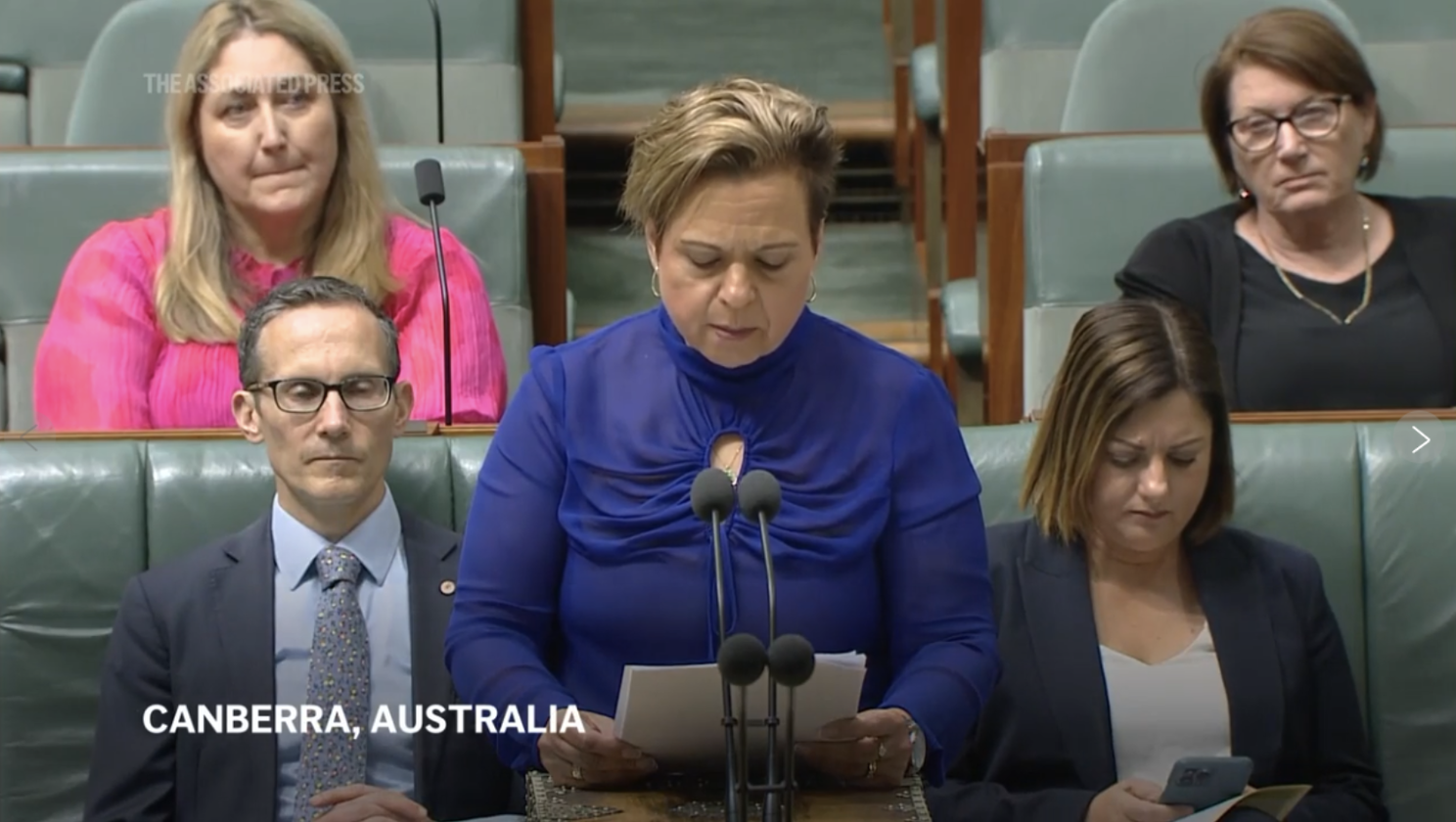
Australia launched the first social media ban with the Online Safety Amendment (Social Media Minimum Age) Act, which prohibits children under the age of 16 from having accounts on social media platforms. A total of 66% of parliament voted in favor of the ban in 2024, punishing companies with fines of up to $49.5M if they fail to take the necessary steps to keep children off their platforms; families themselves will not be fined. Affected companies include Facebook, Instagram, Kick, Reddit, Snapchat, Threads, TikTok, Twitch, YouTube, and various dating applications. The ban commenced in December 2025.
After Australia, Indonesia and Malaysia also developed their own social media bans. And now, the United Kingdom, United Arab Emirates, Brazil, Greece, Austria, Slovenia, Sweden, Germany, Ireland, Denmark, and Norway are considering bans as well, with some already bringing in provisional safety measures.
Successes/failures
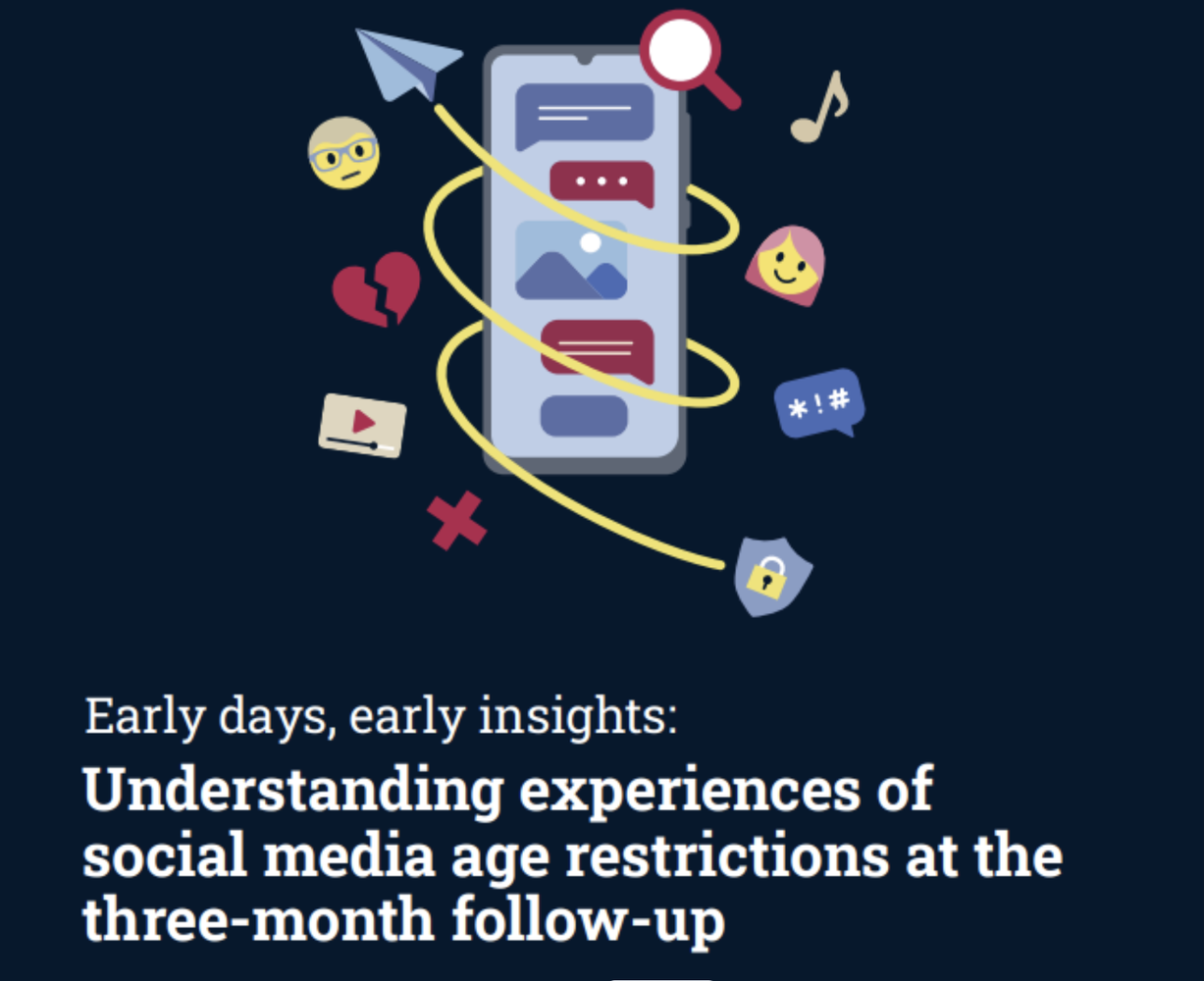
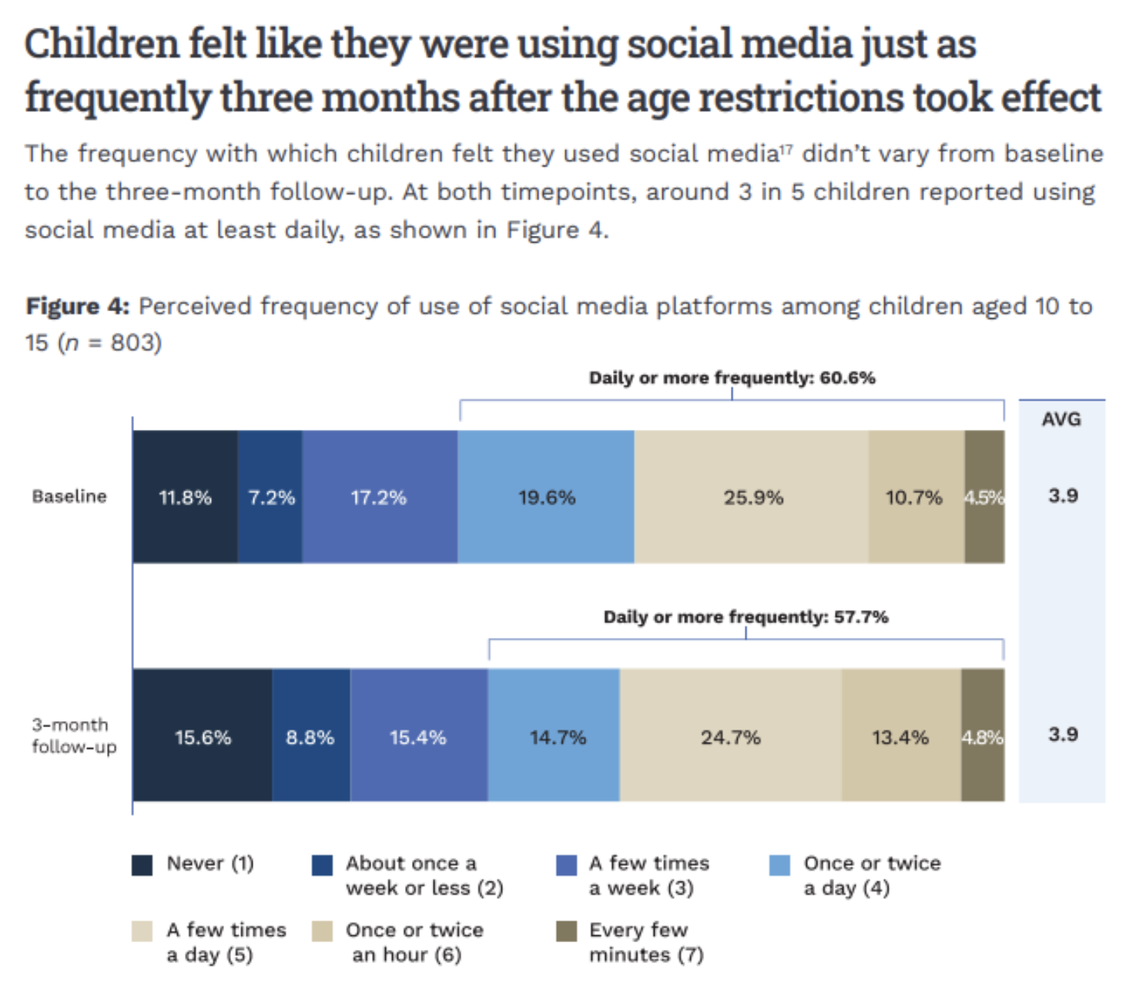
A recent report from Australia’s eSafety Commissioner that gives insights about the ban’s first three months suggests that little has changed. Teens are still using platforms or finding workarounds, and their online habits are largely the same. When the ban started, 85.9% of teens reported using at least one platform regularly, and at the three-month mark, it went down to 81.5%. Snap saw the most significant decrease in use, dropping from 31.5% of teens to 27.9%.
Publications like Reuters, Al Jazeera, and Time Magazine interviewed children, parents, and lawmakers, with articles leaning toward a more critical look at the ban. In an interview with the New York Times, Australian teens described their workarounds: using a parent or older sibling’s profiles, lying about their age during registration, and even drawing on fake mustaches for facial scans. Others continued using these platforms, seemingly without problem or a need to verify their ages.
For those that did follow the rules, it doesn’t appear to affect their offline behaviors either: according to the eSafety Commissioner’s report, “at three months, most children reported that there was little to no change in their engagement with offline activities, behaviours associated with problematic online use, and their wellbeing.”
Is social media bad for children?
Social media is a tricky subject with differing opinions of its effects on children. According to Mayo Clinic, “spending three hours a day using social media was linked to a higher risk of mental health concern” for 12- to 15-year-olds. And, in a report from the World Health Organization, they found that one in six school-aged children experiences cyberbullying.
Social media can also be a boon for children and teens: it’s a way to stay connected with friends, build community, and learn new things. Scientific studies point out how social media can actually help individuals with mental illness, with platforms offering information, avenues for sharing personal stories, and developing communities that offer support and understanding.
And these conversations are ignoring an important aspect: we may be underestimating our teens and their ability to discern online. In a recent study from Snapchat and Alter Agents, 90% of teen participants say they question whether what they see online is true, with 86% fact checking AI results. 62% of participants also mentioned that they prioritize both online and offline experiences, contradicting the idea that kids are online at unhealthy levels.
For young people growing up in smaller or rural towns, those who struggle to socialize with others in person due to anxiety or neurodivergence, and many from minority or marginalized groups, social media can be a gateway to finding online communities that they can meaningfully connect with. While this presents inherent risks, when platforms take the necessary steps to safeguard these spaces, social media can be a digital third space built around fandoms, creative hobbies, and positive social connection.
The ban’s effect on social media’s impact

An important consideration that is often overlooked in these conversations is how much of a role kids and teenagers play in digital culture. Teenage influencers were to thank (or blame?) for the Sephora Kids phenomenon, which created brand recognition for companies like Drunk Elephant, Glow Recipe, and of course Sephora. Each year, teen fashionistas set the tone for back to school season with measurable effects, and may be the reason millennials put down skinny jeans in favor of baggy jeans.
Online, some of the most recognizable videos came from young creators: Quenlin Blackwell got started on Vine as a teen, with many screenshots from that period used as reaction images. She has since become a major force in digital culture with over 20M followers across various social media platforms. Additionally, Jake and Logan Paul began posting as teenagers, and Jay Versace first went viral at 16.
With so many negative influences coming from digital spaces like the “manosphere” and brands leveraging influencers to manipulate younger viewers into buying products they don’t need, social media bans appear to ineffectively protect kids and teenagers while effectively silencing them, leaving adults with agendas to monopolize platforms. With fewer younger voices on social media, those who break through the bans will find platforms populated by those talking down to them rather than peers who can represent their own generation.
Takeaways
There is no easy answer to solving the social media problem for minors. At the end of the day, it will likely take different methods on the individual, societal, and political levels to find a solution for excessive online usage. The fact remains that young people will use social media as part of their daily lives.
Here are just a few options that may alleviate the problem:
- Support media literacy programs: According to Media Literacy Now, media literacy is the ability to decode media messages, assess the influence of those messages on thoughts, feelings, and behaviors, and create media thoughtfully and conscientiously. By imparting kids and teens with these skills, they can counteract the negative messaging they might receive online and be able to think more critically about their online consumption.
- Companies should be proactive instead of reactive to bans: Rather than waiting for lawmakers to decide outcomes, companies should work to ensure kids are safe online. By instituting practices like warnings, stopping autoscroll, and ensuring adults cannot contact minors online, companies can protect younger users and avoid the issue of a ban entirely.
- Invest in third spaces: A big reason children and teens turned to social media was due to the disappearance of third spaces, or a social environment separate from home (the first space) and school or work (the second space). Many teens feel that they are excluded from third spaces, so creating safe and fun places for teens to convene and build community can be helpful in getting them offline.
These bans offer a “one-size-fits-all” approach that is ineffective and ignores the complex needs and issues that come with connecting online. Ultimately, it will take coordinated efforts from governments, platforms, brands, and parents to effectively protect children and teens from the harms of social media. This has proved to be incredibly challenging as nuanced perspectives about the pros and cons of being online get lost as discourse becomes more combative.
With platforms and brands having a vested interest in keeping people on-platform, governments approaching the problem from the outside while being lobbied by parties with vested interests, and parents often falling afoul of social media misinformation more than children, the solution may elude us for years to come.